

Can I just knock my house down and Build a New One?
First, we should point out that it is only really viable to do this with a detached property.
The easiest way by far to build a new home in the countryside is to replace an existing one.
The biggest benefit of this route is that the ‘principle of development’ has already been established. This takes the ‘sustainable location’ problem away, as there is already a house there. There are however some disadvantages to this option.
The first of these is that you need to own the property you are replacing without a mortgage before you can knock it down – Banks do not tend to like it when you demolish the asset on which their loan is secured.
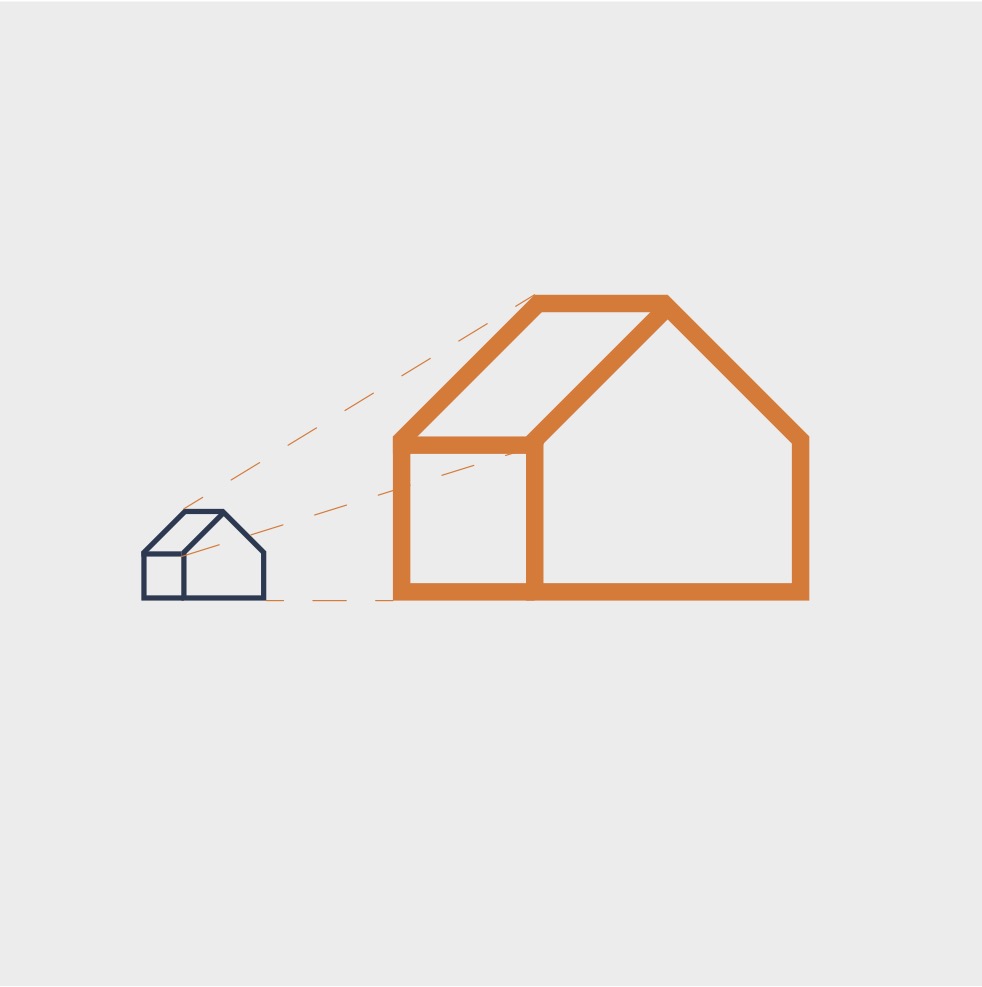
Many LPAs take the view (supported by national policy with properties in the Green Belt) that the replacement can’t be ‘materially larger’ than the building it replaces.
What does ‘Materially Larger’ mean.
Materially Larger is sometimes defined, and sometimes left open to interpretation. Some policies may allow for a 15% increase in floor area or building volume, some will allow for an increase of up to 30%, and others will say nothing. Where it is left open its often helpful to look at recent appeal decisions within the LPA area to see how planning inspectors have interpreted it.
Essentially it takes a measure of the ‘established development’ – normally area or volume – and applies a multiplier which the LPA consider acceptable. Where the multiplier is not available, they will make a subjective judgment based on whether they think the replacement is significantly bigger than the ‘established development’ on the site.
What is acceptable to an LPA can often be established by looking at similar permissions granted recently, or better by looking at appeals to the planning inspectorate that the LPA has recently lost.
The key to pushing this further than may be allowed – where for example you are replacing a bungalow with a house and the policy allows for a 10% increase in floor area – is to increase the established development on the site before you make the application.
There are lots of different ways of doing this, and not all of them apply universally, if you are struggling to get the size of replacement dwelling you would like, or you are struggling to extend your home as much as you would like.
if you are trying to replace a dwelling established through a certificate of lawfulness, look out for my post on ‘Permitted Development and Certificates of Lawfulness’ coming soon, or get in touch via the link above.